The cat just keeps staring as its pet parent enjoys unbridled sex. The animal neither reacts nor moves even as the couple exchanges favors or changes positions. Suddenly, it springs on the bed and begins sniffing…
Ever wonder what an animal is thinking when you have sex in its presence? Does the animal care or, better yet, should you? Do pets even know what you’re doing?
To begin with the last question first, yes, of course they know what you’re doing. Like humans, they emit pheromones, which trigger sexual attraction. Thus, the scent of sex is familiar while not exactly the same. If an animal is spayed or neutered, human sex can't affect it. However, if an animal is unsterilized, then having sex can affect it due to the specific smell of fluids secreted during sex (sperm, lubrication, etc). Overall, try not to traumatize your pet by having sex in front of it. Because we’ll never know exactly what they’re thinking, it’s best not to do anything that could trigger unwanted behavior in your cat or dog, such as excessive curiosity.
Monday, July 28, 2014

Tuesday, July 22, 2014
The Best Pets to Adopt

Let's take age. The younger the better is generally the rule. Still, how can you know that this animal doesn't have inborn diseases or a temper problem? Sometimes an older animal in a shelter is so grateful and loyal that it turned out to be the only right choice you could have done.
After reading The Complete Dog Book, the bible of dog breeds published by the American Kennel Club, we learn that choosing according to breed doesn't guarantee all the traits which you may have expected. Sometimes a mongrel can bring more joy into your life than a dog with a multi-page pedigree.
Ultimately, there is no best option in my opinion. Just ask yourself, when you go to a shelter, these initial questions: Why do I need a pet? Why this pet? Why do I want to get it here? What if I regret my noble impulse?
One thing I like to remind pet lovers is to never betray or overlook animals who know you and love you (i.e. pets of your loved ones who passed away or a divorced couple) if they need a new owner. The only other thing I would advise is to avoid falling under the power of advertising. Just because someone says their animal selection is “one-of-a-kind,” “healthier,” “special” or “unlike anyone else’s” doesn’t mean you’re guaranteed a pet that will not have grave issues. In general, use your instincts and identify any natural connection you may have with a particular animal. Of course, ask questions and know something about the type of animal you want beforehand. Otherwise, you could be in for an unwanted surprise.
Photo credit: Brooklyn Bridge Animal Welfare Coalition/Facebook
Friday, July 11, 2014
Does Pheromone Therapy Help?
 Pheromone therapy is becoming a popular means to control behavioral problems in animals, such as anxiety, fear and aggression. Pet supply stores now carry pheromone diffusers and spray products. Does this work, for the most part, to curb behavior or just certain behaviors more than others?
Based on studies, we cannot conclusively state that pheromone therapy doesn’t work. I can, however, say that it does work effectively in some instances.
Pheromones are chemicals that animals emit that affect the behavior of other members of the same species. They affect an animal’s social behavior, including food gathering, sexual attraction and signaling danger. In nature, pheromones clearly have an impact on dogs’ and cats’ behavior, so the logic is that synthetic pheromone products (i.e. sprays) might be useful in managing behavior problems for pet owners.
These products may help avoid anxiety in pets, but the owner should be calm himself. For example, if an owner is afraid of thunderstorms, the pet will be afraid also, despite the pheromone therapy. First of all, a master MUST be self-confident enough to demonstrate to the animal that he is able to defend it. This is especially important in an animal’s first year of life. Unfortunately, sometimes, the early experience of an animal may be so traumatic that pheromone therapy doesn't work.
Overall, pheromone therapy can be used to prevent or reduce stress-related problems, but the owner must also consider behavior modification techniques and even medications if necessary.
Friday, July 4, 2014
Pets Without Parents
I'm often asked, "Do pets without parents make the best pets?"
People are obviously referring to orphaned pets or those raised by a commercial breeder, or puppy mill. My answer is routinely, “Of course, not!”
Any animal should have the experience of interaction with representatives of its species. In fact, there are some behaviors that may be taught or learned only with the parents' help. Like Mowglis, in the Jungle Book, he will never become human in the full sense of this word, so your pet will not be a full representative of its species if humans replace its parents.
Similarly, the Humane Society recommends that you “never buy puppies without seeing where they and their parents are raised and housed with your own eyes.”
People are obviously referring to orphaned pets or those raised by a commercial breeder, or puppy mill. My answer is routinely, “Of course, not!”
Any animal should have the experience of interaction with representatives of its species. In fact, there are some behaviors that may be taught or learned only with the parents' help. Like Mowglis, in the Jungle Book, he will never become human in the full sense of this word, so your pet will not be a full representative of its species if humans replace its parents.
Similarly, the Humane Society recommends that you “never buy puppies without seeing where they and their parents are raised and housed with your own eyes.”
Unleashed Pets vs. Leashed Pets
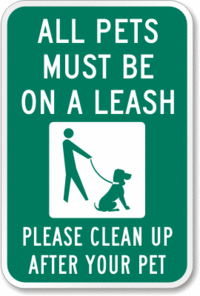 Do you trust your dog to such a degree to let it go unleashed, realizing that anything is possible, especially when other people and animals are around? If your answer is yes, then that's awesome! An unleashed dog has much more opportunities to learn its environment.
Animals that are allowed to express spontaneous activity will demonstrate more intensive exploratory behavior and will have better knowledge of their environment. During this process, they will experience new feelings of enjoyment and display behavior that corresponds with feeling safe. These new feelings and skills will strengthen the animal’s confidence and trust in the world. Furthermore, an animal that has the ability to make choices and consequently, have a more mature psyche compared to other animals that do not have such liberty. It will also display a more mature attachment to its owner. Without such liberty, the animal will otherwise make its choice in accordance with the owner’s wishes. This choice will be a choice for security, but it will inhibit the animal’s mental maturity.
Generally, humans are not interested in their pets’ independence. For that reason, pets always remain dependent on the humans, seeking protection and favors, while their spontaneity and ability to make independent decisions are suppressed. It is clear that the recognition of the pets’ independence is fraught with undesirable consequences for their owners. However, highly evolved group animals understand group norms and rules, and an animal that has learned the rules will not violate them.
It is important that the rules, set by pet owners, agree with the species-specific capabilities and needs of the animals. Pet care that does not give the animal the opportunity to mature does not allow the animal to develop a mature, reciprocal attachment to humans. To achieve this mature, reciprocal relationship, the person should make the animal’s habitat as rich as possible. The animal must learn as much as it can and have the ability to cope with situations it faces on its own.
People's mature love for an animal promotes the animal’s development. We say a lot about the necessity of development, which is more easily achieved if a dog is unleashed. If, however, you live in a megalopolis, your mild-tempered unleashed Wolfhound might frighten someone. So my advice: try to find places where your dog can be unleashed without threat to others, such as a dog park. Recently, I visited Piedmont Dog Park in Atlanta, GA, and both observed and talked to pet owners. I could immediately tell which dogs had been acclimated to independence and which sought their owners' approval. Look for a forthcoming video on this visit.
Friday, June 13, 2014
Trust is Just as Important in Pet Relationships
Without trust, fear dominates a relationship. Fear affects all of our relationships, including those with our pets. In my new book, Your Pet's Peeves, I mention four main fears that affect human-animal interactions. In some cases, our pets can respond somewhat like our human loved ones when we project our insecurities on them. This may result in what some pet owners describe as "misbehavior," including forms of rebellion, noncompliance, and aggression. Overall, mutual lack of trust and attachment, poor communication, and inability to set rules of behavior will cause problems in interactions and mutual dissatisfaction.
Identifying the source of a fear is a good start to tackling it. Usually some stressful or traumatic life experience has caused us to distrust ourselves, our environment and/or others. Before you continue to allow the past to affect your pet and others, speak with a therapist. I will be in Atlanta, Georgia, on Saturday, June 14th at 11:30 a.m. at the Microsoft Store in Lenox Mall to take your questions and discuss parts of my new book that could help you create new habits that counteract fears affecting your pet.
.jpg)
Identifying the source of a fear is a good start to tackling it. Usually some stressful or traumatic life experience has caused us to distrust ourselves, our environment and/or others. Before you continue to allow the past to affect your pet and others, speak with a therapist. I will be in Atlanta, Georgia, on Saturday, June 14th at 11:30 a.m. at the Microsoft Store in Lenox Mall to take your questions and discuss parts of my new book that could help you create new habits that counteract fears affecting your pet.
Friday, June 6, 2014
New Pets at Home Cause Welcome and Unwelcome Changes
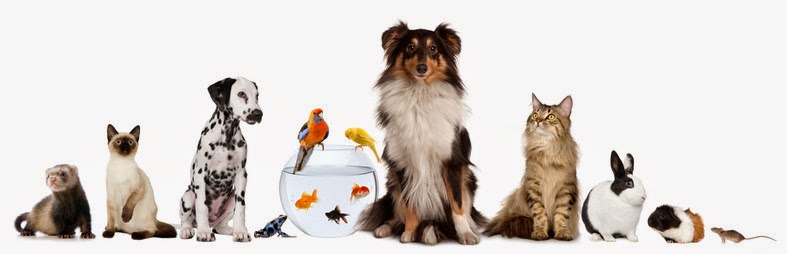
My job, as an animal psychologist, is to help disillusioned, disappointed or even disgusted pet owners. Thus, I want to prepare those thinking about getting a pet.
First of all, ask yourself these questions: Why do I need a pet? Why did I choose this particular pet? Maybe I want it because I watched a movie where this kind of animal impressed me so much that I wanted to own it. Maybe I saw someone with the same species or breed and was so impressed that I wanted the same animal. Maybe it’s that I can't forget a pet from my childhood and want to relive that experience. Maybe I suffer from loneliness and want to address the problem by getting a pet.
Whatever the reason, be totally honest with yourself because making a decision to get a pet imposes serious responsibilities for years and can alter your lifestyle. Are you really ready? Are you sure that your momentary whim will not spoil your quiet, albeit a bit boring (as you may think) life? These questions are important because people’s unrealistic or uniformed expectations can lead to major disappointments and unhappiness.
Okay, so you are ready. (Keep in mind, although you may be ready, everyone in your household may not be. This lack of total readiness almost always poses an issue, which affects the pet.) You know why you want to get a pet and what you want to get.
Leaving aside the harmless lizards and goldfish, although they also need a care, let's take a cat or a dog. When you get this pet of your dreams, you will face different challenges, such as torn clothes; scratched furniture; damaged books and important documents; broken vases; unearthed lawns; pools and heaps on the floor; and simply getting used to the nature of the animal. Not matter how familiar, this new pet will likely be different from the pet of your childhood or from your favorite movie, so keep your expectations in the realm of reality. In addition to preparing your heart, mind and home, you’ll also need to prepare your wallet. Pet care and maintenance can be expensive.
Most pet owners realize and accept all of this and relish their animals as a member of the family. In fact, your relationship with your pet might be one of the most pleasant experiences, one that transforms both you and the animal.
Subscribe to:
Posts (Atom)